
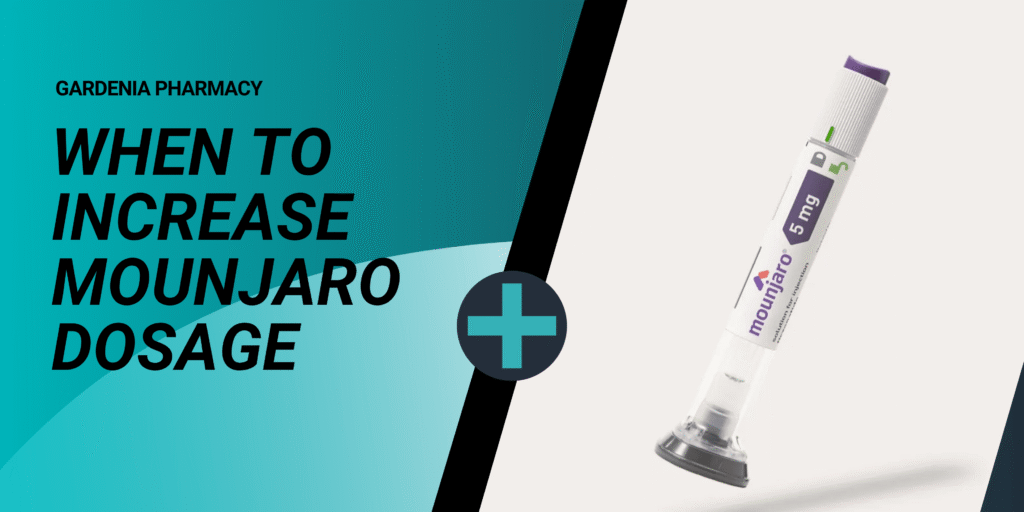
If you’ve recently started Mounjaro (tirzepatide) and you’re noticing your results plateauing, you’ve probably typed “when to increase Mounjaro dosage” into Google more than once. It’s one of the most common questions our pharmacists at Gardenia Pharmacy hear from patients across the UK, and for good reasons getting the timing right matters just as much as starting the treatment itself.
Mounjaro doesn’t work on a one-size-fits-all schedule. Your prescriber will look at your bloodwork, your side effects, and your progress before deciding when to increase your dose. This guide walks through the official titration schedule, the clinical signs that typically prompt a dose increase, and the safety checks that should always come first. As always, this article is for general information only, every dosage decision must be made together with your prescriber or GP, never on your own.
What Is Mounjaro and How Does It Work?
Mounjaro is the brand name for tirzepatide, a once-weekly injectable medicine that mimics two natural gut hormones, GLP-1 and GIP. Together, these hormones slow digestion, increase feelings of fullness, and help regulate blood glucose. Mounjaro was approved by NICE for treating obesity on the NHS in December 2024 and is now available within specialist weight management services in England and through some GPs. It’s licensed for type 2 diabetes management and, for eligible adults, weight management alongside diet and exercise.
Because tirzepatide is dose-dependent, meaning higher doses generally produce a stronger effect on appetite and blood glucose, the question of when to increase Mounjaro dosage becomes central to getting meaningful results without unnecessary side effects.
The Standard Mounjaro Dosage Titration Schedule
Mounjaro is supplied in six strengths: 2.5mg, 5mg, 7.5mg, 10mg, 12.5mg, and 15mg, all delivered through the same pre-filled pen device. Doses start at 2.5mg for four weeks to help the body adjust, before moving up to 5mg.
The escalation pattern that prescribers in the UK and globally follow is:
- Weeks 1–4: 2.5mg once weekly (starter dose, not effective for ongoing glycaemic control or significant weight loss)
- Weeks 5–8: 5mg once weekly
- Weeks 9–12: 7.5mg once weekly (if further escalation is needed)
- Weeks 13–16: 10mg once weekly
- Weeks 17–20: 12.5mg once weekly
- Week 21 onward: 15mg once weekly (maximum licensed dose)
Doses typically shouldn’t be raised by more than 2.5mg every four weeks, and the maximum recommended dosage for adults is 15mg once weekly. Each increase should only happen after at least four weeks on the current dose, specifically to reduce the risk of gastrointestinal side effects.
It’s worth noting that not everyone needs, or should aim for, the maximum dose. Clinical trial data shows that increasing from 5mg to 15mg produced roughly a 6–7% greater weight loss on average, but not everyone needs the higher dose to reach their goals, and some people plateau successfully on a lower maintenance dose.
When to Increase Mounjaro Dosage: Key Signs to Discuss With Your Prescriber
So, when to increase Mounjaro dosage in practice? There’s no single trigger, it’s a combination of timing, tolerability, and results. These are the main factors your prescriber will weigh up:
1. You’ve completed at least four weeks on your current dose. This is non-negotiable. Mounjaro needs roughly four to five weeks to reach a stable level in your bloodstream, so judging effectiveness any sooner gives an inaccurate picture.
2. Your weight loss or blood glucose improvement has plateaued. If your weight has stalled for two to three consecutive weeks, or your blood glucose readings haven’t improved despite consistent diet and lifestyle habits, this is often the clearest sign a dose review is due.
3. Your side effects are mild and manageable. Some nausea, reduced appetite, or mild digestive changes are expected and don’t usually prevent a dose increase. Persistent vomiting, severe abdominal pain, or signs of dehydration are reasons to pause rather than escalate.
4. You’re still on a “titration” dose rather than a maintenance dose. The 2.5mg and 7.5mg and 12.5mg strengths exist mainly as stepping stones — they’re not designed for long-term use, so most patients will move through them rather than stay there indefinitely.
5. Your prescriber has reviewed your bloodwork and overall health. Kidney function, liver function, and any new medications or health changes are all checked before any increase is approved.
If most of these apply to you, it’s a good time to book a review with your prescriber rather than adjusting the dose independently. Working out when to increase Mounjaro dosage is rarely a single snapshot decision, it’s a pattern your prescriber builds up over several reviews.
How Your Prescriber Decides When to Increase Your Dose
UK prescribers follow a structured, regulated process. The MHRA’s prescribing framework requires thorough clinical assessment of each patient’s medical history, current medications, and individual risk factors, alongside ongoing clinical supervision with regular review appointments to monitor progress.
In practice, this means your prescriber will typically:
- Review your symptom diary or app-based tracking since your last dose change
- Re-check your weight, BMI, and (where relevant) HbA1c or blood glucose trend
- Ask about gastrointestinal tolerance, hydration, and appetite changes
- Confirm there have been no new contraindications, such as pancreatitis symptoms or gallbladder issues
- Decide whether to hold the current dose, increase by one step (2.5mg), or in some cases extend the current dose for longer if side effects are still settling
A full UK titration schedule moves from a 2.5mg starter dose up to a 15mg maintenance dose in a step-by-step process, but your individual pathway through that schedule is personalised, not automatic.
What Happens If You Increase Too Soon?
Jumping the gun on a dose increase is one of the most common (and avoidable) mistakes patients make. Increasing before your body has adjusted to the current dose typically results in:
- More intense nausea, vomiting, or diarrhoea
- A higher chance of needing to pause treatment altogether to recover
- Greater risk of dehydration, which can affect kidney function
- No additional benefit, since side effects, not extra fat loss, are usually what increases first
This is precisely why every official Mounjaro dosing protocol enforces a minimum four-week gap between increases. Patience genuinely pays off here: most people who escalate too quickly end up needing to drop back down to a lower dose anyway, which slows overall progress rather than speeding it up.
Managing Side Effects During Dose Escalation
Every time your dose increases, it’s common to experience a short window, usually three to seven days, where side effects are slightly more noticeable before settling again. Simple strategies that genuinely help include:
- Eating smaller, more frequent meals rather than large portions, which eases pressure on a slower-digesting stomach
- Staying ahead of hydration, particularly important in the days following an injection
- Avoiding very fatty or spicy meals around injection day, when nausea tends to peak
- Injecting at the same time each week, which some patients find reduces unpredictability in side effects
- Tracking symptoms, so you and your prescriber have clear evidence when deciding on the next step
If side effects are severe rather than mild — for example, persistent vomiting that prevents you keeping fluids down, or sudden severe abdominal pain — contact your prescriber or NHS 111 promptly rather than waiting for your next scheduled review. GLP-1 medicines are generally considered safe and effective for their licensed uses, but anyone experiencing symptoms of severe pancreatitis should seek urgent medical attention.
Mounjaro Weight Loss in Luton: Local Support for Your Dose Journey
If you’re based locally and searching for mounjaro weight loss in Luton, Gardenia Pharmacy offers in-person consultations alongside ongoing dose-review support, so you’re never left guessing about timing or tolerability between GP appointments. Our GPhC-registered pharmacists can talk through your titration progress, flag anything that needs a prescriber’s attention, and help you build the lifestyle habits that make each dose increase more effective. Combining professional, local guidance with the national titration framework tends to give patients in Luton and the surrounding area a smoother, better-supported journey through their Mounjaro dosage schedule.
What If You’re Not Ready to Increase Yet?
Plenty of patients do very well staying on a lower dose for longer than the “standard” schedule suggests, and that’s entirely normal. Reasons your prescriber might recommend holding rather than increasing include:
- You’re still losing weight steadily on your current dose
- Side effects haven’t fully settled from the last increase
- You have an upcoming health event, holiday, or illness where new side effects would be inconvenient or risky
- Cost considerations, since higher-strength pens are generally more expensive
There’s no clinical requirement to reach the maximum 15mg dose. The right dose is the one that delivers your health goals with side effects you can comfortably manage, nothing more.
Frequently Asked Questions
How do I know when to increase Mounjaro dosage? Generally, you’ve completed at least four weeks on your current dose, your side effects are mild, and your weight loss or blood glucose control has plateaued. Your prescriber will confirm whether it’s the right time to increase your dose at your scheduled review.
Can I increase my Mounjaro dose early if I’m not losing weight fast enough? No. Increasing before the four-week mark significantly raises the risk of severe gastrointestinal side effects without adding any extra benefit, since your body hasn’t yet reached a steady level of the medicine.
What’s the maximum Mounjaro dose? 15mg once weekly is the highest licensed dose for adults in the UK. Many patients reach their goals on a lower maintenance dose, such as 7.5mg or 10mg.
Will increasing my dose make side effects worse? Mild, temporary increases in nausea or digestive changes are common after each step up, usually easing within a week. Severe symptoms should always be reported to your prescriber.
Do I need to see my prescriber before every dose increase? Yes. Mounjaro is a prescription-only medicine, and dose changes should always be confirmed by your prescriber based on your bloodwork, symptoms, and progress.
Conclusion: Increase Your Mounjaro Dose Safely
Knowing when to increase Mounjaro dosage comes down to three things: enough time on your current dose, manageable side effects, and a genuine plateau in results — all confirmed by your prescriber, never self-managed. The titration schedule exists to protect you from unnecessary side effects while still helping you reach an effective, sustainable dose.
If you’re due a review, finding the process confusing, or simply want a second opinion from a GPhC-registered pharmacy team, Gardenia Pharmacy is here to help guide you through every stage of your Mounjaro journey, safely and at the right pace for your body.